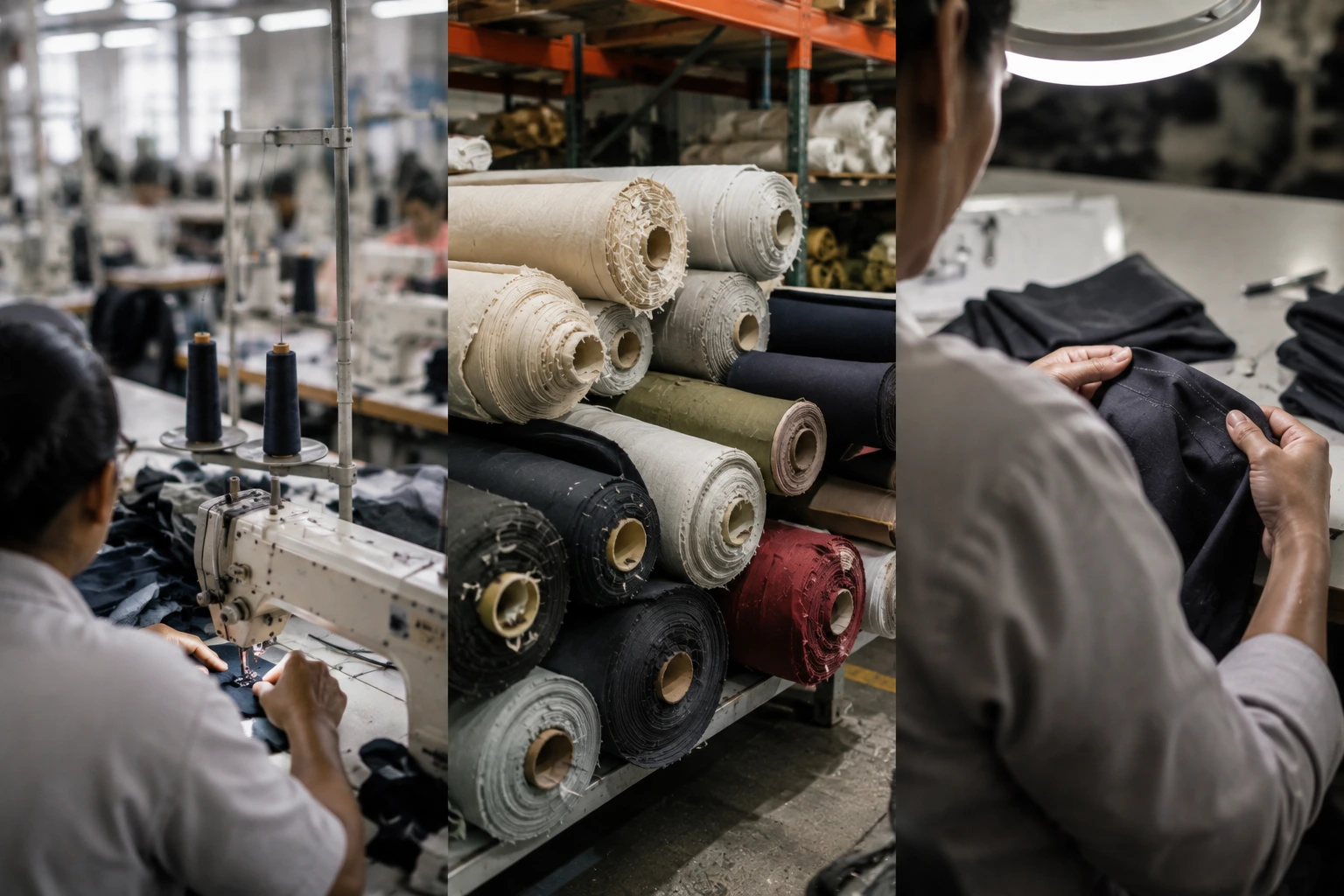
Finding reliable apparel clothing manufacturers is the single decision that determines whether a fashion brand launches on schedule or spends six months chasing a factory that stopped answering emails. Dubai has grown into a genuine production hub for startups and emerging labels. Still, the market is crowded with garment clothing manufacturers offering wildly different minimum order quantities, sampling standards, and lead times. This guide breaks down what apparel clothing manufacturers actually do, the types you’ll encounter in Dubai, and how to vet one before you sign anything.
What Do Apparel Clothing Manufacturers Actually Do for a Fashion Brand?
Apparel clothing manufacturers turn a design into a physical, sellable garment. That covers pattern making, fabric sourcing, sample development, cutting, sewing, finishing, and quality checks before the order ships. Some garment manufacturing partners handle production only after you supply finished patterns and fabric. Others manage the entire process from a sketch to a packed carton.
That range matters because a manufacturer that’s excellent at bulk basics, plain t-shirts, uniforms, and polos isn’t necessarily equipped to execute a structured jacket or a complex print placement. Matching the manufacturer’s actual capability to your product, not just their marketing page, is the first filter.
Types of Apparel Clothing Manufacturers in Dubai
Full-Package Manufacturers
Full-package apparel clothing manufacturers handle design development, fabric sourcing, sampling, and production as one service. This suits brands that don’t yet have an in-house technical designer or pattern maker, since the factory fills that gap.
Cut-and-Sew Manufacturers
Cut-and-sew garment manufacturers work from patterns and specs you already provide. You retain more control over fit and fabric, but you need your tech pack finished before you approach them, which means more prep work on your end.
Private Label Manufacturers
Private label garment clothing manufacturers produce from an existing base pattern or product line that you customize with branding, trims, or minor design changes. This route is faster and usually has a lower minimum order quantity, which makes it a common starting point for new labels testing the market.
How to Choose the Right Apparel Clothing Manufacturers for Your Brand
Minimum Order Quantities
MOQs among Dubai apparel clothing manufacturers vary from under 50 pieces per style with private label producers to several hundred with full-package factories. Confirm the MOQ per style, per color, and per fabric, since some manufacturers quote a lower headline number that only applies to a single SKU.
Sampling and Tech Pack Accuracy
Ask to see how a manufacturer handles a first sample against your tech pack. A factory that gets construction and measurements right on the first or second round, without constant back and forth, is telling you how the bulk order will go. Our 10 Questions to Ask a Fashion Manufacturer Before You Sign Anything breaks down exactly what to ask at this stage.
Quality Control and Certifications
Reliable garment manufacturing partners run in-line and final inspections rather than checking quality only after the order is packed. If a manufacturer can’t describe their inspection process in specific terms, that’s a signal to keep looking. Our guide to garment inspection services in Dubai covers what a proper inspection process should include before goods ship.
Lead Times and Communication
Confirm production lead time separately from shipping time, and ask what happens if a shipment slips. Manufacturers who give a specific, documented timeline are generally easier to work with than those who only offer a rough estimate.
Garment Manufacturing Process: From Sample to Shipment
The process starts with a tech pack review, where the manufacturer checks your specs and flags anything unclear before quoting, usually within three to five days. Fabric sourcing follows, taking anywhere from one to three weeks depending on whether the fabric is in stock or needs to be sourced fresh. Sampling is next, and this is the stage most brands underestimate: a first sample and any revisions typically take two to four weeks. Once a sample is approved, bulk production- cutting, sewing, and finishing- runs three to six weeks depending on order size. Quality inspection happens both during production and before packing, adding another three to five days, and shipping time depends entirely on the destination.
Timeframes shift based on order size, fabric availability, and how many sampling rounds it takes to approve a style, but this is a realistic baseline for planning a launch date.
For a deeper look at where this process typically breaks down and how to prevent it, see our guide on how to choose the right clothing manufacturer.
Common Mistakes Brands Make When Working With Garment Clothing Manufacturers
- Skipping the sample stage to save time. This almost always costs more time later when bulk production doesn’t match expectations.
- Not confirming fabric composition in writing. Verbal confirmation of GSM or fiber content isn’t enforceable if the delivered fabric is different.
- Choosing a manufacturer purely on price. The cheapest quote often excludes finishing, labeling, or packaging costs that appear later.
- Ignoring communication speed during the sampling phase. Slow replies before you’ve placed an order tend to get slower after payment.
- Not visiting or vetting the facility. Even a video walkthrough can reveal whether a manufacturer’s actual setup matches their claims.
Most of these mistakes come from the same root cause: treating the first quote as the finish line instead of the start of a vetting process. A low price with no sampling rigor behind it usually ends up costing more once rework, delays, or a failed quality check are factored in. Brands that build in time for a proper sampling round and ask direct questions about inspection standards tend to avoid the majority of these problems before they happen.
Why Dubai Is Becoming a Hub for Apparel and Garment Manufacturing
Dubai’s position between Asian fabric sourcing markets and Western and GCC retail destinations gives apparel clothing manufacturers based here shorter shipping windows than factories in Southeast Asia offer to the same markets. Free zones simplify import and export logistics, and a growing base of small-batch and private label manufacturers has made it realistic for a new brand to produce locally without committing to factory-scale minimum orders. That combination is why more emerging labels are sourcing production in the UAE rather than exclusively overseas.
Proximity also changes how brands manage quality. A founder working with an overseas factory usually can’t visit during production, which means problems surface only after a shipment lands. Working with garment clothing manufacturers based in or near Dubai makes in-person sample reviews and factory visits realistic even for a small brand, which shortens the feedback loop considerably during a brand’s first few production cycles.
Conclusion
Choosing between apparel clothing manufacturers in Dubai comes down to matching MOQ, sampling quality, and communication to what your brand actually needs at its current stage, not to whichever factory responds fastest. A manufacturer that fits a 500-unit basics order won’t necessarily be the right partner for a 50-unit structured collection. Get the sampling process and inspection standards confirmed before you commit, and the rest of the production relationship tends to follow. If you’d rather have that vetting done for you, The Fashion Coterie’s fashion production and low MOQ manufacturing service works directly with vetted apparel clothing manufacturers on behalf of emerging and established brands.
Frequently Asked Questions
What’s the difference between apparel clothing manufacturers and garment manufacturers?
The terms are largely used interchangeably in the industry. “Apparel” typically refers to finished clothing items, while “garment manufacturing” describes the production process itself, but both terms point to the same type of production partner.
What is a typical MOQ for apparel clothing manufacturers in Dubai?
MOQs range from around 50 pieces per style with private label and small-batch producers up to several hundred with full-package factories. The exact number depends on fabric, complexity, and the manufacturer’s own production capacity.
How long does garment manufacturing take from sample to delivery?
A realistic timeline runs from roughly six to ten weeks total, covering tech pack review, sampling, bulk production, and quality inspection, though this varies with order size and how many sample revisions are needed.
Can a new fashion brand work directly with apparel clothing manufacturers without a sourcing agent?
Yes, though it requires a finished tech pack, a clear understanding of fabric specifications, and enough time to manage sampling rounds directly. Many first-time brand owners choose to work with a consultancy instead to manage that process.
What should be included in a tech pack before approaching a manufacturer?
A complete tech pack includes measurements, construction details, fabric specifications, trims, and labeling requirements. Manufacturers use this document to quote accurately and to produce a first sample that matches your intent.