A fashion tech pack, also called a technical package, is a document that tells a clothing manufacturer exactly how to make a garment. It brings together technical flats, measurements, fabrics, trims, and construction details in one place. This guide explains what the document contains, who creates it, and how it is used from the first sample to bulk apparel production.
What Does a Technical Package Do in Clothing Production?
It turns your design into clear written and visual instructions for the factory. The pattern maker, sample room, and production team all work from the same reference, so nothing is left to guesswork.
Tech Pack vs Spec Sheet vs Bill of Materials
A spec sheet and a bill of materials (BOM) are parts of a tech pack, not replacements for it. The spec sheet lists garment measurements, the BOM lists fabrics and trims, and the full package combines both with drawings and construction notes.
Why Do Clothing Brands Need One Before Production?
Clothing brands need it because it reduces production mistakes, shortens sampling, and makes factory quotes comparable.
- Clear communication with the garment manufacturer
- Fewer sample rounds and revisions
- Fair, comparable quotes from several factories
- Consistent quality between the approved sample and bulk production
- A reusable record if you change suppliers
What Happens If You Skip the Tech Pack?
Without it, the factory guesses, and you pay for the wrong guesses through extra samples, delays, and a garment that differs from your design. A missing sleeve measurement or an unspecified zipper is enough to change both fit and cost.
What Does a Fashion Tech Pack Include?
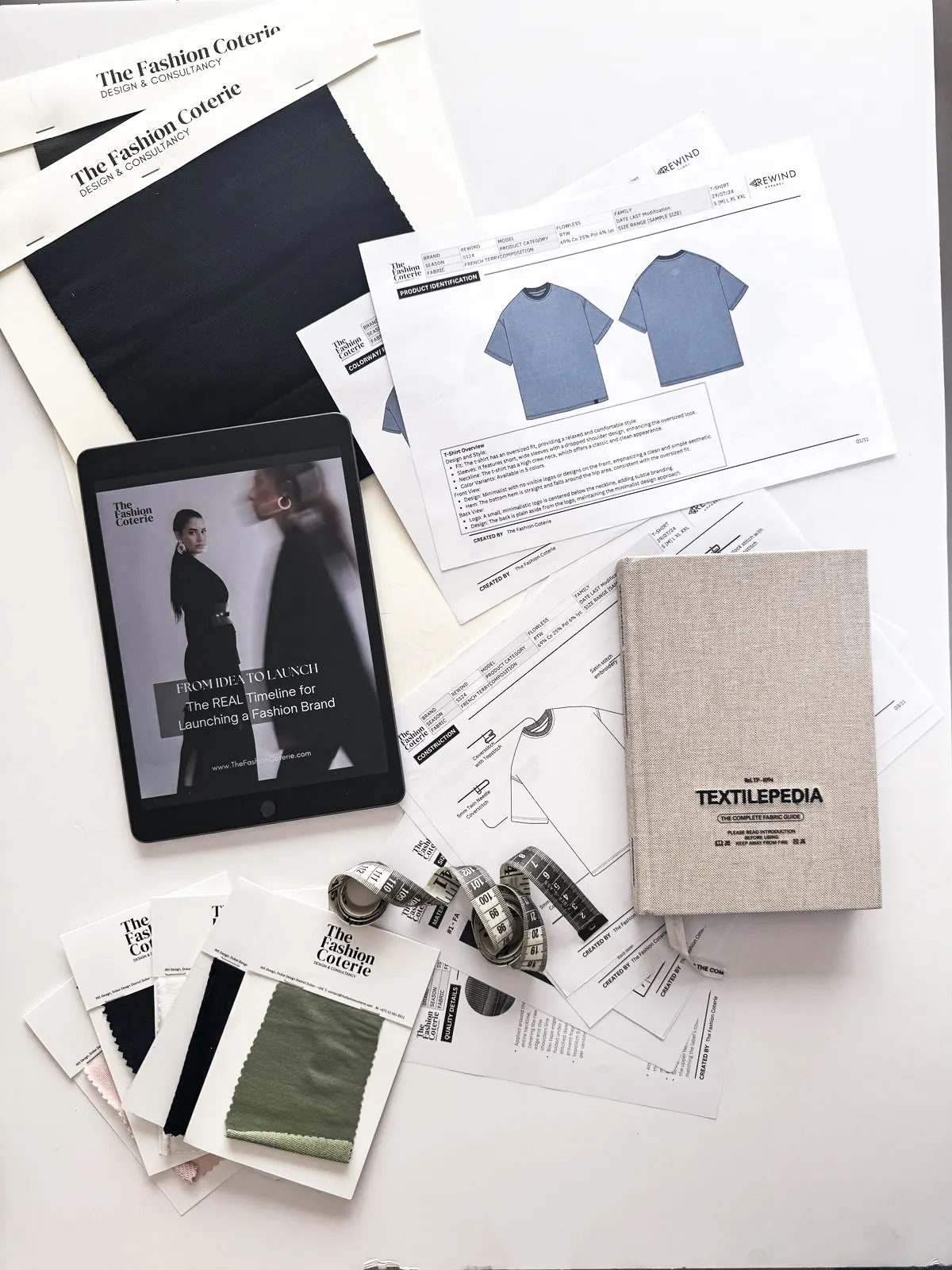
A complete fashion tech pack includes technical drawings, measurements, materials, construction details, and branding instructions.
- Cover page: style name, style number, season, size range, and revision date
- Technical flats: front, back, and detail drawings, also called fashion flats
- Points of measure and tolerances: the size chart plus the allowed difference, such as plus or minus 1 cm
- Grading: how measurements change from one size to the next
- Bill of materials: fabric, lining, thread, zippers, buttons, and labels
- Construction details: stitch types, seam finishes, hem depth, and pocket placement
- Colorways and artwork: Pantone references, prints, embroidery, and logo placement
- Labels and packaging: care labels, hangtags, and folding instructions
- Revision log: changes made after each sample
What Does a Fashion Tech Pack Look Like?
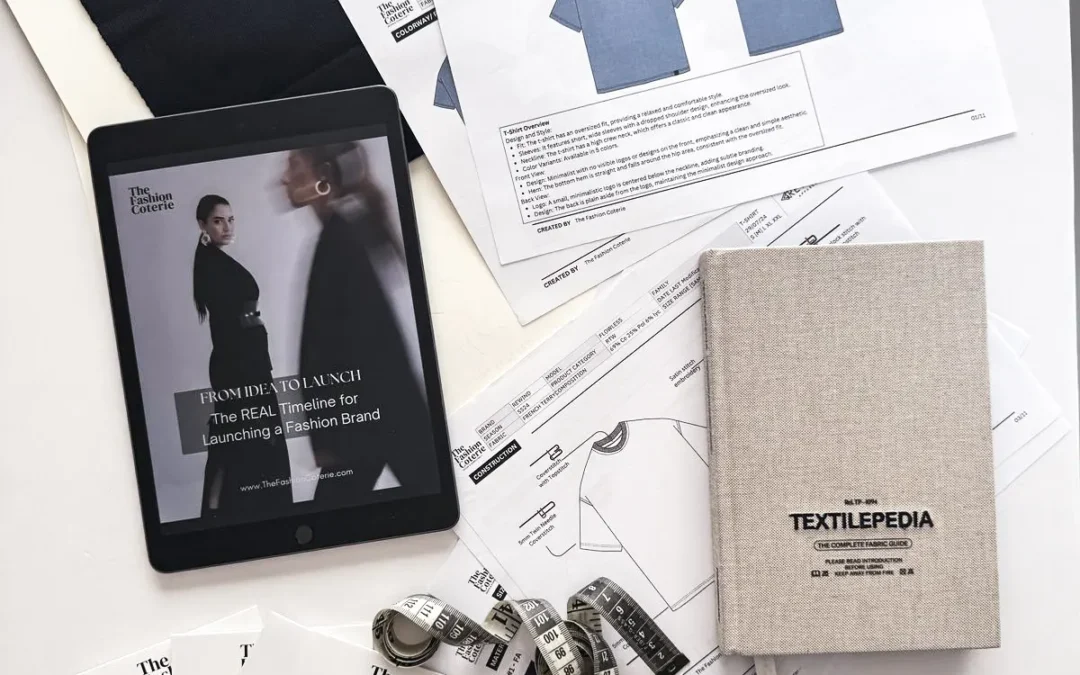
It looks like a multi-page PDF, with drawings on some pages and tables on others. A t-shirt version might have a cover page, front and back flats, a measurement table, a BOM, and a labeling page, while outerwear needs extra pages for linings, zippers, and pockets.
Who Prepares the Technical Package?
A technical designer or product developer usually prepares it, though small brands often do it themselves or hire a specialist. A fashion consultancy can also build it and advise on factories, as explained in our guide on how a fashion consultant supports emerging clothing brands.
When Does a Clothing Brand Need One?
A brand needs a fashion tech pack as soon as a design moves from concept to a factory, including the first sample, a new supplier, or any request for quotes. Early idea sketches do not need one, but once you spend money on samples, you do.
How Do Factories Use the Technical Package?
Manufacturers use it to quote, make patterns, sew samples, and produce bulk orders. The costing team reads the BOM, the pattern maker reads the measurements and flats, and quality control checks finished garments against the tolerances, as covered in our production guide for brand owners.
How Do Samples and Revisions Change It?
Each sample round updates the document, and the final version is based on the approved pre-production sample. You measure the sample, record your fit comments, add a new revision date, and number each version so only one master file is in use.
How Do You Create a Tech Pack Step by Step?
You build it by documenting design decisions in order, from flats to materials, measurements, construction, and labeling. Finish the design, draw the flats, choose fabrics and trims, add measurements and tolerances, write construction notes, review for conflicts, send for sampling, and update after each sample, as part of the wider fashion product development process.
What Should You Prepare Before You Start?
Before you start, gather your sketches, fabric and trim choices, a base size, logo files, and your target cost and order quantity. Having these ready avoids stop-start work, whether you fill in a template or build from scratch.
What Are the Most Common Tech Pack Mistakes?
The most common mistakes are missing measurements, vague materials, and unclear drawings.
- Missing tolerances: without them, “close enough” is open to interpretation
- Vague materials: “cotton” is not enough without weight and composition
- Unclear or inconsistent flats: drawings that differ between views
- Conflicting pages: the measurement table says one thing and the drawing another
- No revision control: several versions in circulation
- Forgotten labels and packaging: often added too late
Many of these also appear in our list of the biggest mistakes new fashion brands make in their first year of production.
Ready to Turn Your Design Into a Production-Ready Garment?
If you are developing a collection and are not sure your specifications are complete, The Fashion Coterie can help. Our team develops tech packs with measurements, fabric codes, trims, construction details, and illustrations, and supports sourcing, sampling, and production through partner networks in Italy, Turkey, and Tunisia. A short conversation can show you what your styles still need before they reach a factory.
Book a free 15-minute intro call with The Fashion Coterie to talk through your styles and your next step.
Conclusion
A fashion tech pack is the document that connects your design to the factory. It reduces mistakes, supports fair quotes, and gives you one reference for every sample and production run. For clothing brands, it is one of the most useful steps before spending money on samples. Start by gathering your sketches, materials, and measurements, then build it one section at a time or get expert help.
FAQs
1. How much does a fashion tech pack cost?
It depends on garment complexity, the number of styles, and who prepares it. Ask for a quote based on your specific styles.
2. Can I send the same file to several factories?
Yes, and it helps you compare quotes fairly. Keep one master version so every factory prices the same specifications.
3. Is it the same as a pattern?
No. A pattern holds the cut shapes of the garment, while the document holds the instructions and specifications. The pattern maker uses it to build the pattern.
4. What file format works best?
A PDF is the most common format for sending to factories. Many brands build it in Excel, Illustrator, or dedicated software first.
5. Who owns it, the brand or the factory?
Brands should keep their own master copy of their designs and specifications. Confirm ownership and confidentiality terms in your supplier agreement.