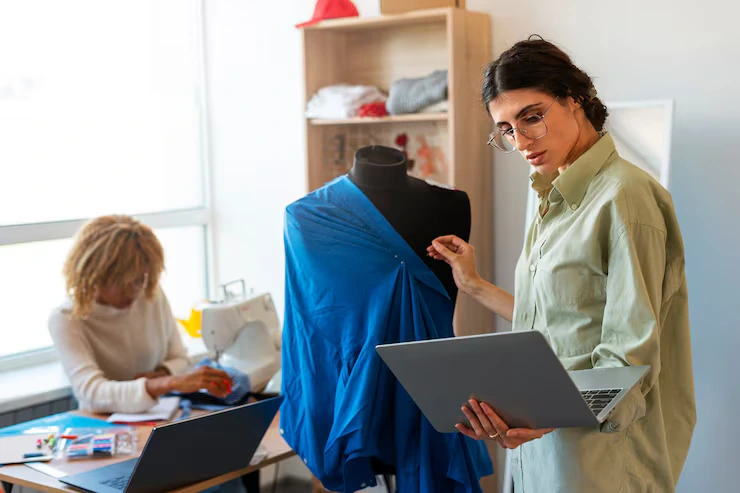
Every fashion brand you admire went through the same unglamorous journey before it ever reached a hanger. From the label you wore today to the runway house you follow on Instagram, all of them started the same way. That journey is called fashion product development. How well a brand handles it decides almost everything else: quality, cost, timing, and whether customers come back for more.
Most founders don’t fail because their designs are bad. They fail because nobody walked them through what actually happens between “I have an idea” and “it’s in stock.” This guide does exactly that. Step by step, with realistic timelines, real costs to expect, and the mistakes we see most often at The Fashion Coterie when brands come to us after something’s already gone wrong.
Here’s what this guide covers: what fashion product development actually means, the seven stages explained in plain language, and a realistic timeline and cost picture. It also breaks down whether in-house, outsourced, or consultancy-led development fits your brand, how quality control, supply chain, and brand positioning connect to the process, and the common mistakes, expert tips, and trends shaping where the industry is heading.
What Is Fashion Product Development?
Fashion product development is the complete process of turning a design idea into a finished, sellable garment. It covers design, technical specification, material sourcing, sampling, costing, manufacturing, and quality control.
Think of it as the operational backbone between “creative vision” and “product on the shelf.” Skip a step, rush a stage, or hand it to the wrong partner, and the damage shows up later. Fit issues, blown budgets, or a shipment that doesn’t match the sample you approved are usually the result.
Who’s Involved in the Process
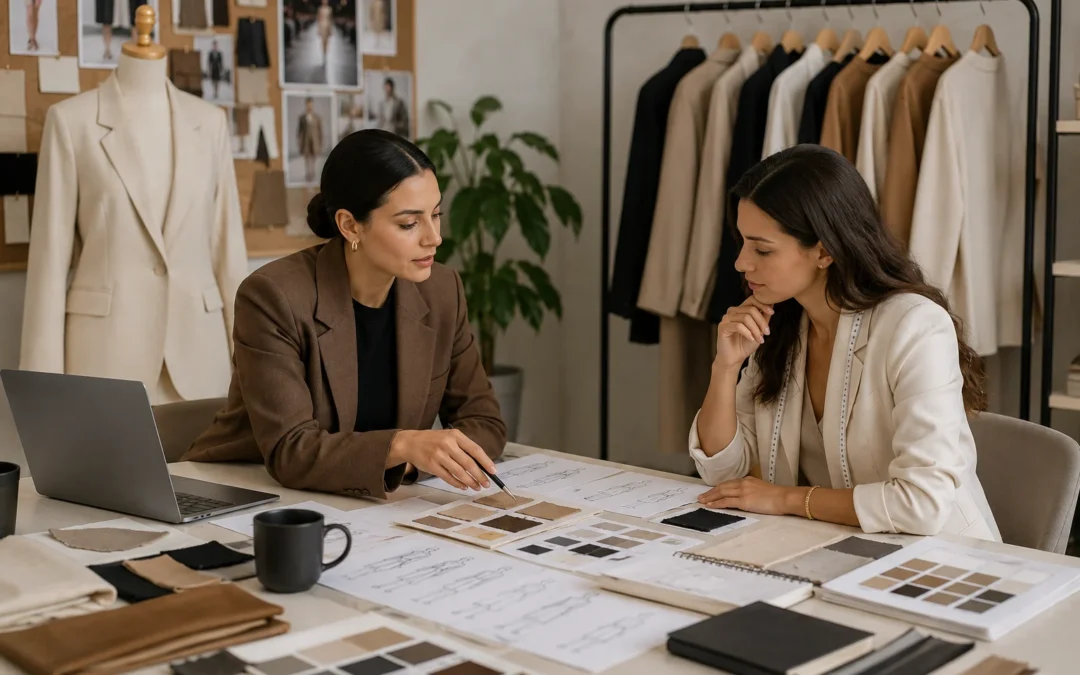
A small brand might have one person wearing every hat. A larger one splits the work across a team. The designer originates the concept and aesthetic direction, while the technical designer translates that concept into construction detail through the tech pack.
Beyond those two roles, a product developer typically owns the process end to end. A pattern maker builds the pattern the garment is cut from, a sourcing agent finds and vets fabric and factories, and a quality control inspector checks the product against spec at every stage. The manufacturer then cuts, sews, and finishes the garment at scale.
For independent brands, a fashion consultancy often fills several of these roles at once. That’s one reason so many founders bring in outside help rather than hiring a full internal team from day one.
The 7 Stages of Fashion Product Development
Concept and Trend Research
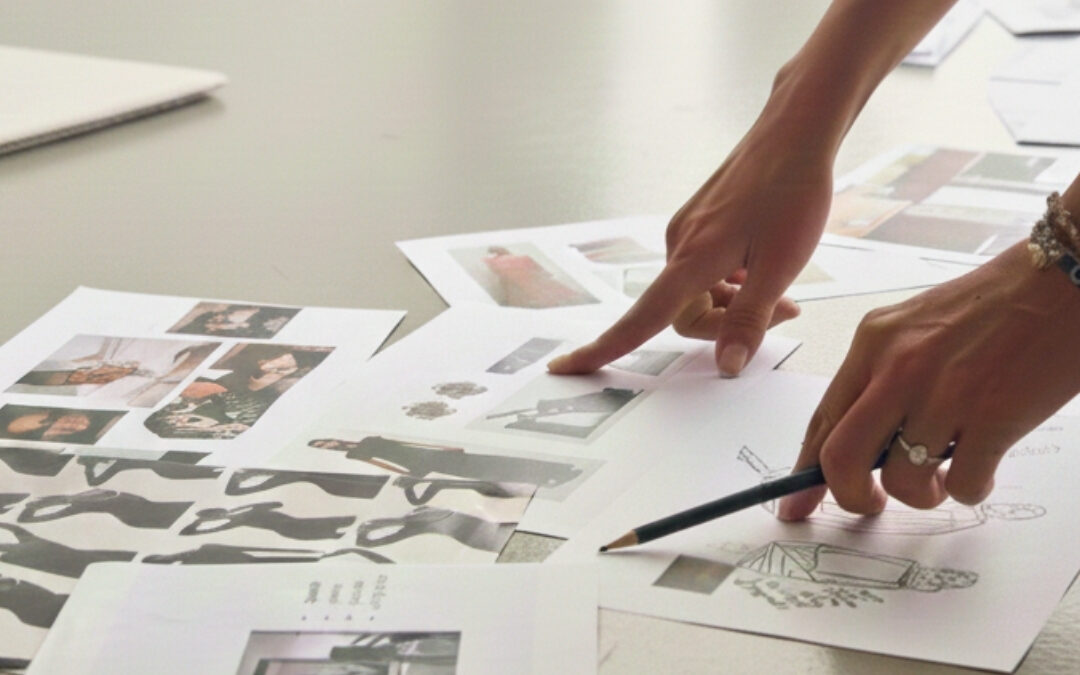
Every collection starts with research, not sketching. This means studying what’s selling, what your target customer actually wants, and where the market has gaps. Mood boards and trend reports are useful tools here, but the real work is deciding what your brand stands for before you draw a single line.
Design and Technical Sketching
The concept becomes a flat sketch: a technical drawing of the garment shown front and back without a model. This isn’t about making it look pretty. It’s about communicating construction: seams, darts, closures, and trims.
The Tech Pack
Think of a tech pack as the garment’s blueprint. It documents every measurement, material, stitch type, and finish so a manufacturer anywhere in the world can produce it accurately. A weak tech pack is the single biggest cause of samples coming back wrong.
A good tech pack should let a factory that has never seen your design produce a first sample that’s 90% correct. If your samples routinely need three or four rounds of fixes, the problem usually traces back to the tech pack, not the factory.
Material and Trim Sourcing
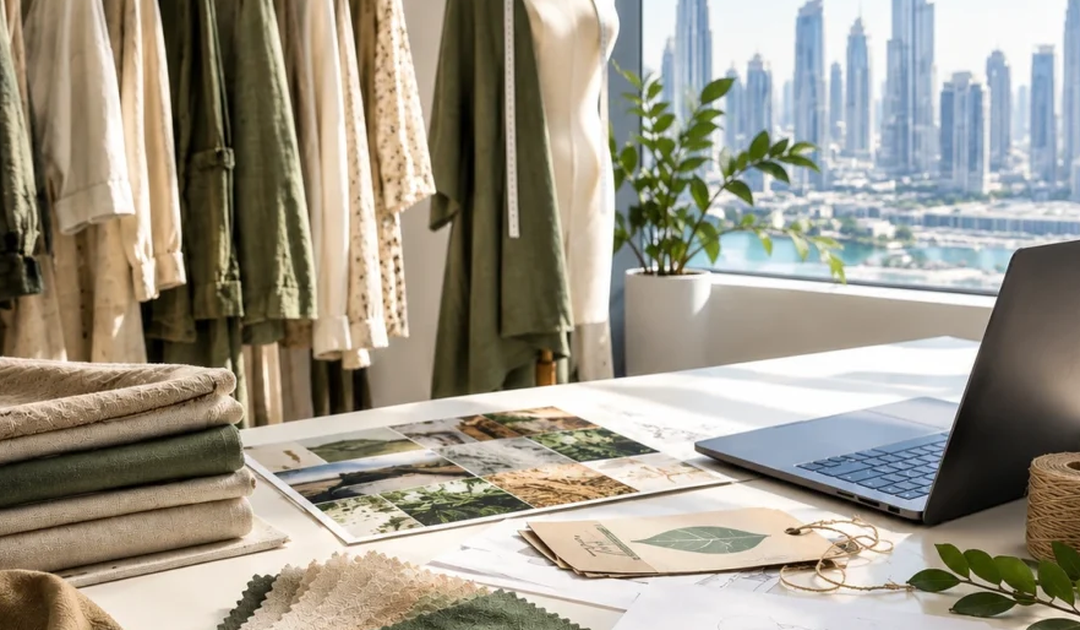
Fabric choice affects everything downstream: cost, drape, durability, and how the garment actually feels on the body. This stage involves requesting swatches, testing performance to see whether the fabric shrinks, pills, or fades, and confirming suppliers can deliver consistent quality at the volume you need.
Sampling and Fit
Fabric choice affects everything downstream: cost, drape, durability, and how the garment actually feels on the body. This stage involves requesting swatches and testing performance to see whether the fabric shrinks, pills, or fades. It also means confirming suppliers can deliver consistent quality at the volume you need.
Costing and Pricing
Costing isn’t just fabric plus labor. A realistic cost sheet accounts for materials, trims, labor, shipping, duties, sampling fees, and a margin buffer for the inevitable surprises. Brands that skip this and price based on gut feeling often discover, too late, that they can’t hit a profitable retail price.
Manufacturing and Quality Control
Bulk production begins once the production sample is approved. This is where inline and final inspections matter most, catching problems before a container full of garments ships, not after.
Realistic Timeline: How Long Does Fashion Product Development Take?
For a single style in a first collection, the full process typically takes 12 to 24 weeks from concept to finished product. Concept and trend research usually takes one to three weeks, and design and tech pack development run another one to two weeks per style. Sourcing materials and trims takes two to four weeks, while sampling across all its rounds takes three to six weeks.
Costing and final approval take about a week. Bulk production takes four to eight weeks, and quality control plus shipping adds another one to three weeks.
Timelines stretch considerably for first-time brands, complex constructions like outerwear or tailoring, or overseas sourcing with longer shipping windows. Working with an experienced partner who already has vetted factory relationships is the single biggest lever for compressing this timeline.
In-House vs. Outsourced vs. Consultancy-Led Product Development
Building a fully in-house team gives a brand complete creative control. It works best for established labels with the volume and budget to support salaries and dedicated tools, though it’s the slowest and most expensive model to set up.
At the opposite end sits a fully outsourced, factory-led approach. It offers the lowest overhead and the fastest launch, but it hands over much of the creative control and carries a higher risk of costly mistakes without an independent quality gatekeeper watching the process.
Somewhere in between is a consultancy-led model. Cost stays moderate and scales with the project, creative control stays high because the consultancy represents your brand’s interests rather than the factory’s, and built-in quality checks catch problems early.
There’s no universally correct answer here. It depends on your stage, budget, and how much creative and quality control you’re willing to hand over. Most brands we work with land on a consultancy-led model in their first two to three collections, then decide whether to build an in-house team once volume justifies it.
Garment Quality Control and Inspection
Garment quality control isn’t a single check at the end. It should happen at multiple points, starting with a pre-production inspection of raw materials before cutting begins. Inline inspection during production catches stitching or fit issues while there’s still time to fix them, and a final random inspection before shipment statistically samples finished units to confirm everything still matches spec.
Professional garment inspection services typically check measurements against the tech pack, stitch and seam quality, fabric consistency, colorfastness, and packaging compliance. Skipping inline inspection is one of the most common and most expensive mistakes we see. By the time a problem is caught at final inspection, an entire production run may need rework, or worse, may already have shipped with defects that come back as returns.
Fashion Supply Chain Management Considerations
Product development doesn’t happen in a vacuum. It’s shaped by your supply chain: where materials come from, how factories are vetted, and how you handle disruption.
Sound fashion supply chain management starts with diversifying suppliers so one delay doesn’t halt an entire collection. It also means building real relationships with factories rather than treating every order as a one-off transaction.
Understanding minimum order quantities matters too, before you commit to a design that requires volume you can’t yet sell. So does planning lead times backward from your launch date rather than forward from “whenever it’s ready.” For emerging brands, low-MOQ manufacturing partners have made it far more realistic to launch a proper collection without warehousing thousands of unsold units, a shift that’s changed how founders approach this whole process over the past few years.
How Product Development Connects to Fashion Brand Positioning
It’s tempting to treat product development as a purely operational function, separate from branding. It isn’t. Every material choice, fit decision, and quality standard either reinforces or undermines your fashion brand positioning.
A brand positioned as premium can’t cut corners on fabric weight or finishing. Customers notice immediately, even if they can’t articulate why. A brand positioned around sustainability needs sourcing decisions that actually hold up under scrutiny, not just a green label. Product development is where brand strategy either becomes real or falls apart.
Common Mistakes to Avoid
Two mistakes show up more than any others. Skipping a detailed tech pack to save time often means paying for it later in sample revisions, and choosing a factory on price alone, without checking their experience with your specific product type, tends to backfire the same way.
Beyond these, brands often underestimate MOQ requirements and lock into a volume they can’t sell. Some approve a sample too quickly without checking fit on an actual body rather than a form. Others ignore inline quality checks in favor of one inspection at the very end, cost their garments based on rough estimates instead of a full itemized sheet, or let design and production teams operate as if they don’t need to talk to each other.
Expert Tips and Best Practices
Build in a buffer of at least two to three extra weeks per collection for your first few production cycles, since first-timer delays are the rule rather than the exception. Ask any potential factory for references from brands making similar products, not just any garment.
It also helps to keep a single, shared source of truth for your tech pack, since version confusion between designer, factory, and quality control is a frequent and avoidable failure point. Starting with a smaller, low-MOQ run lets you validate fit and demand before committing to full production volume.
Emerging Trends and Future Outlook
Sustainability continues to reshape sourcing decisions, with more brands prioritizing recycled and traceable materials even at a slightly higher cost. Digital prototyping and 3D sampling are reducing the number of physical samples needed, cutting both time and material waste.
Global supply chains also continue to face disruption. Brands that diversify sourcing and build genuine factory relationships, rather than treating manufacturers as interchangeable, are proving more resilient.
Conclusion
Fashion product development isn’t one task. It’s a chain of decisions, and each one affects the next. Nail the tech pack, and sampling goes faster. Get sourcing right, and quality control gets easier. Get sourcing right, and quality control gets easier. Handle quality control well, and your brand’s positioning actually holds up when customers open the box.
If you’re navigating this process for the first time, or you’ve been burned by a factory that didn’t deliver what you approved, you don’t have to figure it out alone. The Fashion Coterie works with brand founders at every stage of product development, from first concept through production and quality control. If you’d like a second set of expert eyes on your next collection, book a consultation and let’s talk through where you are.
Frequently Asked Questions
What are the main stages of fashion product development?
Concept research, design and tech pack creation, material sourcing, sampling, costing, manufacturing, and quality control, typically in that order, though stages often overlap in practice.
How long does fashion product development take for a first collection?
Most first collections take twelve to twenty-four weeks from concept to finished product, depending on complexity, sourcing location, and how experienced the team running the process is.
What is a tech pack, and why does it matter so much?
A tech pack is the technical blueprint for a garment, its measurements, materials, construction details, and trims that a manufacturer uses to produce it accurately. A weak tech pack is the most common cause of sampling delays.
Should a new brand handle product development in-house or hire help?
It depends on budget and volume. Most emerging brands get the best balance of cost, control, and quality by working with a consultancy through their first few collections before deciding whether to build an internal team.
How does quality control actually work during production?
Through inspections at multiple points, before cutting begins, during production, and before shipping, rather than a single check at the end.